
Optimise Yourself: How Media Nudges Train Us To Be Better Workers, Consumers, and Selves

Over 24 hours, I tracked every moment in which my media environment subtly encouraged me to improve something about myself, my productivity, my appearance, my habits, my future employability. Once you start noticing these signals, it’s impossible to unsee how pervasively platforms imagine us as self-optimising subjects.
Morning: Notifications as behavioural architecture
Before getting out of bed:
• A health app reminds me I didn’t close yesterday’s rings.
• LinkedIn suggests “people like me” who have recently started new jobs.
• A banking app pushes a message about developing “better saving habits.”
These aren’t neutral. They encode a vision of the ideal subject: disciplined, competitive, future-oriented.
Platform capitalism increasingly relies on affective nudging, micro-signals that align user behaviour with economic incentives.

Commute: Advertising as self-comparison
Tube ads for language-learning apps, gym promotions, mental health platforms, and fintech savings tools converge on a single rhetoric: you could be better.
This mirrors theories of neoliberal subjectivity: individuals bear responsibility for optimising themselves in response to structural precarity.

Platforms convert personal anxiety into monetisable trajectories of self-improvement.
Afternoon: Platform design as implicit judgement
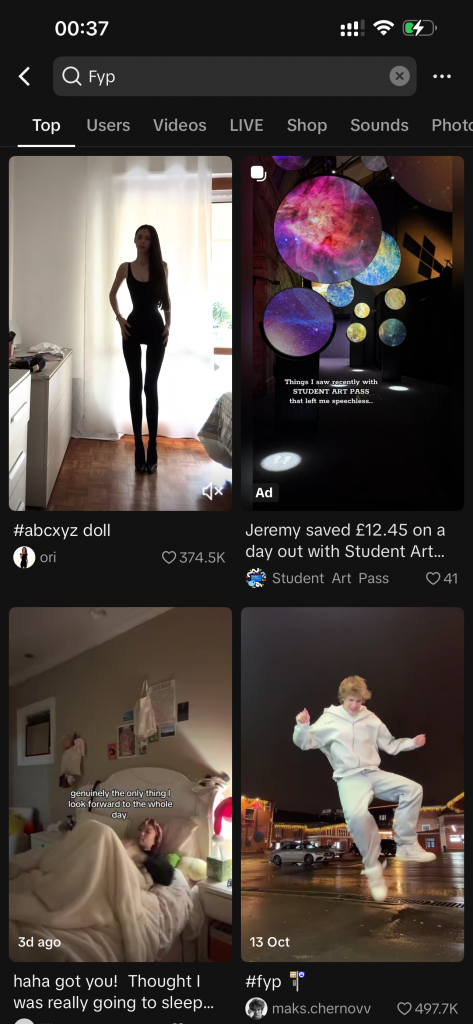
On Instagram and TikTok:
- Algorithmic ranking exposes me to people who are fitter, wealthier, more aesthetically curated.
- “For You” content often includes productivity hacks, investing tips, skincare routines, lifestyle micro-disciplines.
These platforms subtly produce an economised self-perception: value is measurable (likes, view counts), comparable (benchmarked against peers), and improvable.
Evening: Higher education as optimisation
Emails from university about upcoming deadlines or “career development opportunities” play into the same logic. Even in institutional settings, value is framed as individual investment and return.
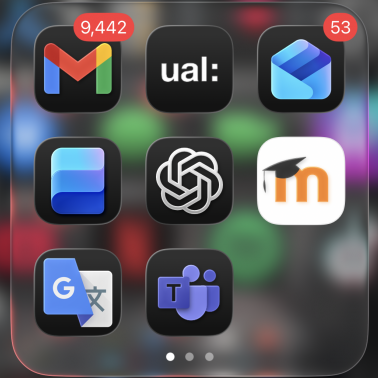
How does this affect my feelings and economic imagination?
While none of these touchpoints explicitly says “you are inadequate,” the cumulative effect is a persistent awareness that:
- there is always a metric you could be improving
- your future depends on constant optimisation
- attention to self-branding is a precondition for economic security
This aligns with theories of the platform economy in which the self becomes a project under permanent revision, shaped by data-driven infrastructures that reward certain forms of behaviour and visibility.
Emotionally, the experience is ambivalent:
- Motivation is real, these cues can energise action.
- Anxiety is equally real, the horizon of optimisation is endless.
- Comparison is unavoidable, platform architectures are relational.
Ultimately, the media environment functions less as a mirror and more as an operating system for subjectivity, guiding how individuals imagine their value and their future.

What strikes me most, after a full day of observing these cues, is how rarely they invite rest, contentment, or sufficiency. The imagined subject of platform capitalism is never “enough”, always slightly behind, always in need of upgrading. Even leisure becomes productive: walks are tracked, emotions are optimised, relationships are branded through visibility. This produces a strange psychological condition in which self-worth becomes inseparable from performance, and downtime easily turns into guilt. The pressure is subtle, rarely coercive, yet deeply internalised. In this sense, optimisation is no longer just an economic demand, it becomes an ethical obligation that shapes how I evaluate myself.
Leave a Reply