What Happens When “Free” Media Isn’t Free Anymore? A Thought Experiment in Value, Attention, and Fairness

At first glance, the media I consume daily feels free: TikTok scrolls, YouTube rabbit holes, Spotify playlists, news articles, endless memes. But the reality, obvious to anyone who works in or adjacent to digital economies, is that I already pay for all of it. I just pay with data, attention, and behavioural surplus, not with money at the point of consumption.
So what happens if we flip the model? Imagine a world in which every piece of media demanded a direct financial transaction.
What I would keep
Several media categories become non-negotiable:
• Specialised journalism, such as Il Post or Internazionale. Their interpretive depth is a public good: I’d pay because, without them, my informational environment becomes shallow and reactive.
• Music streaming, but likely a premium tier with no ads, because the marginal cost per hour of listening remains low relative to value.
• YouTube, but not in its infinite entirety, rather, a curated set of creators whose work I know is time-intensive (longform video essays, investigative channels, technical explainers).
The logic here isn’t purely economic. It’s about cognitive ROI: I’d pay for media that reduces noise, increases signal, and anchors my sense-making in a world already oversaturated with content.

What I would let go
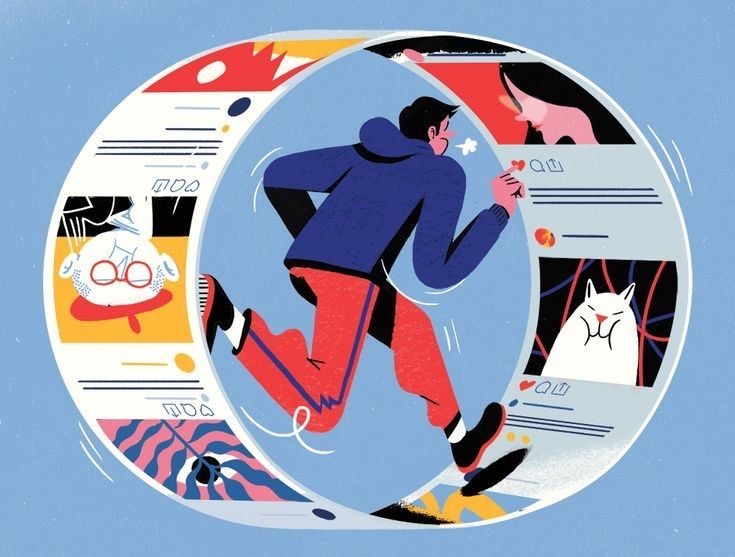
• Most social media feeds. Their value is stochastic; the majority of consumption is filler. If every scroll cost €0.01, the economic irrationality would quickly become obvious, these interfaces are designed for compulsivity, not value.
• Low-quality news aggregators. Paying directly would expose how little original journalism they provide.
• Algorithmically optimised short-form content, unless bundled cheaply.
These decisions align with what political economy scholars highlight: when the cost becomes explicit rather than hidden in surveillance-capitalist infrastructures, users adopt value-maximising behaviour rather than addiction-maximising behaviour.
Would my choices be purely economic?
Not entirely. Media is cultural, emotional, and symbolic capital.
• I might keep certain creators because I feel a parasocial loyalty to them.
• I’d support some independent journalists out of normative commitment to a pluralistic media sphere.
• I might pay for niche podcasts not because of their utility, but because of the identity I associate with them.
This is where cultural economy matters: value isn’t only objective; it is socially constructed.
Paying directly for media reveals the difference between what we enjoy and what we genuinely value.
What would be the fairest way to pay?
The fairest mechanism is probably a mixed model:
1. Micro-subscriptions at creator or outlet level (similar to Patreon, but frictionless).
2. Platform-level bundles, where a portion of the fee is redistributed algorithmically based on actual consumption (Spotify’s long-discussed “user-centric” model).
3. Public-interest subsidies for essential journalistic institutions—because markets alone cannot sustain democratic information ecosystems.
4. Guaranteed free access to news during crises, funded collectively.
In short: fairness requires recognising that media is not purely a commodity; it is infrastructure for cultural and democratic life. The current “free” model hides costs in our privacy and autonomy. A paid model would make those costs explicit, and force us to decide what we truly value.
Leave a Reply